

Choosing your agent type
The first decision you will make is whether your agent handles inbound calls, outbound calls, or both. This choice affects the configuration options available to you and how the agent behaves during conversations.- Inbound agents answer calls from customers who dial your business number. Common use cases include reception, customer support, and after-hours answering.
- Outbound agents place calls on your behalf. Common use cases include appointment reminders, lead follow-ups, and satisfaction surveys.
Step-by-step agent creation
Navigate to Voice AI
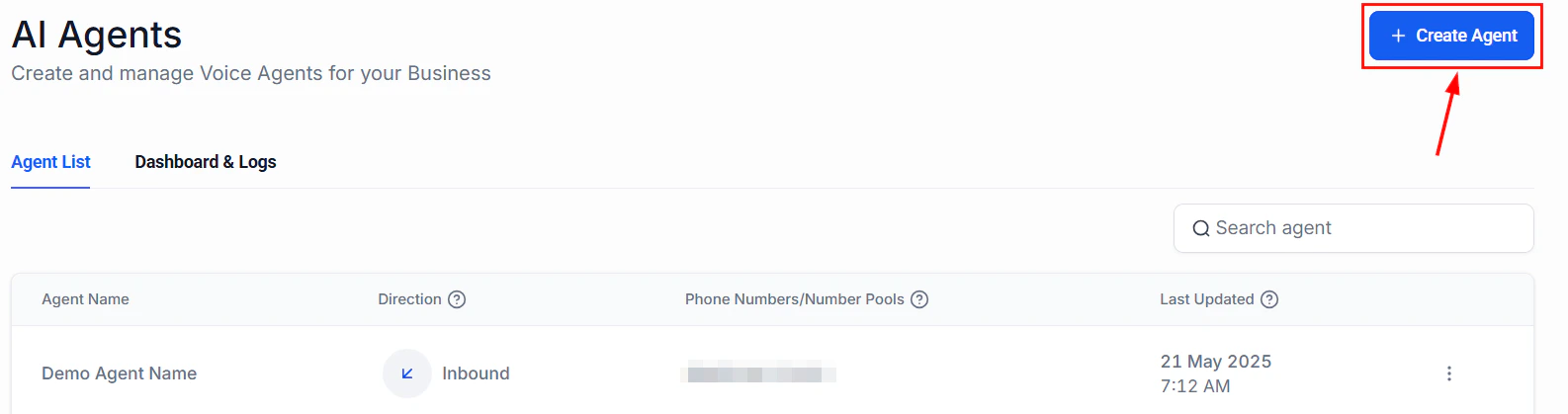
Click the Create Agent button to start building your Voice AI agent
Name your agent and choose a direction
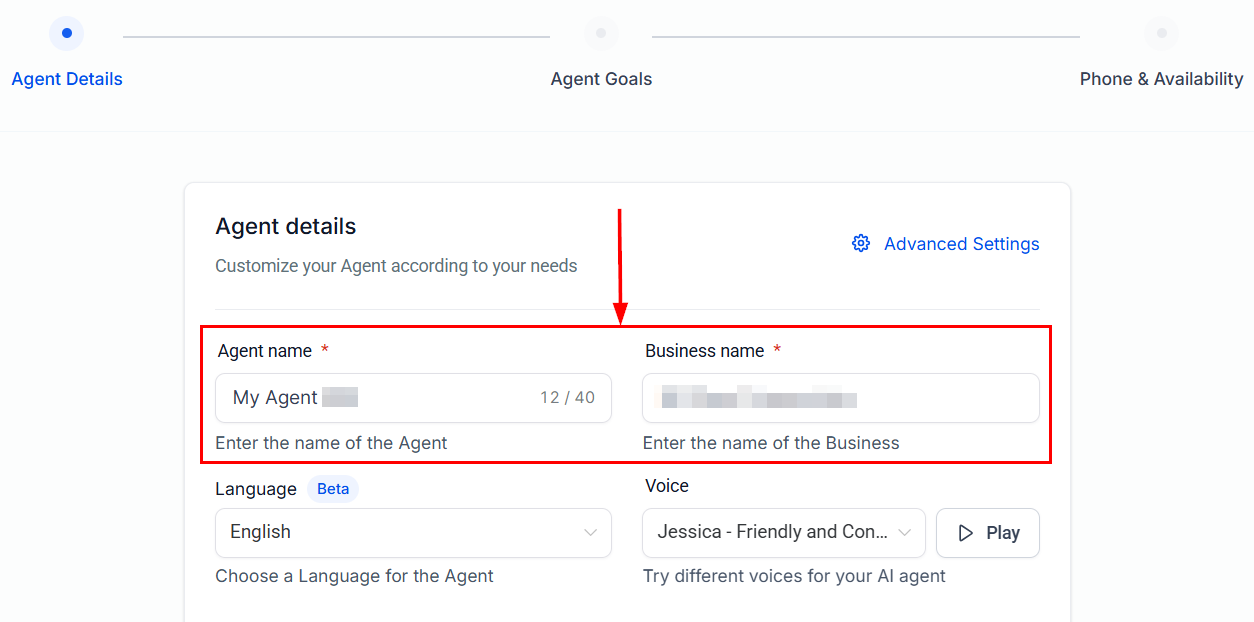
Enter a descriptive name and select the call direction for your agent
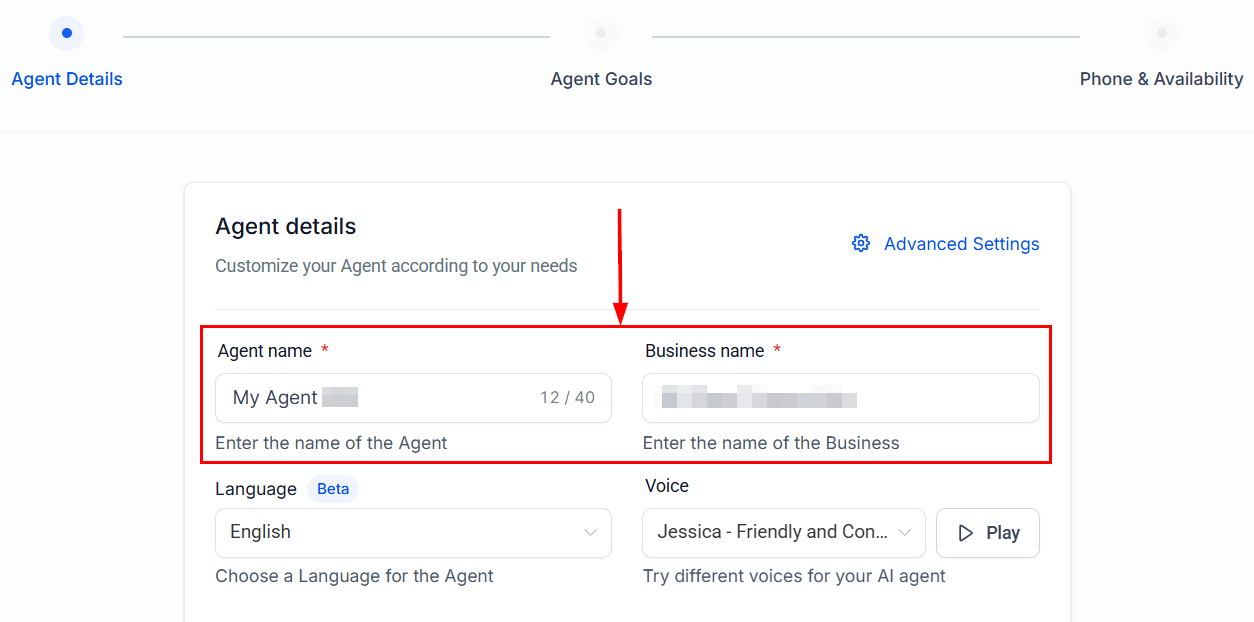
Enter your agent name in the configuration panel
Select a voice
- Brand alignment — Pick a voice that matches your brand personality. A law firm may prefer a calm, measured tone, while a fitness studio might choose something more energetic.
- Clarity — Some voices perform better for technical or medical terminology. Test a few options with your specific vocabulary.
- Speed — Each voice has a natural cadence. You can adjust speaking speed in advanced settings, but starting with a voice that naturally matches your desired pace produces better results.
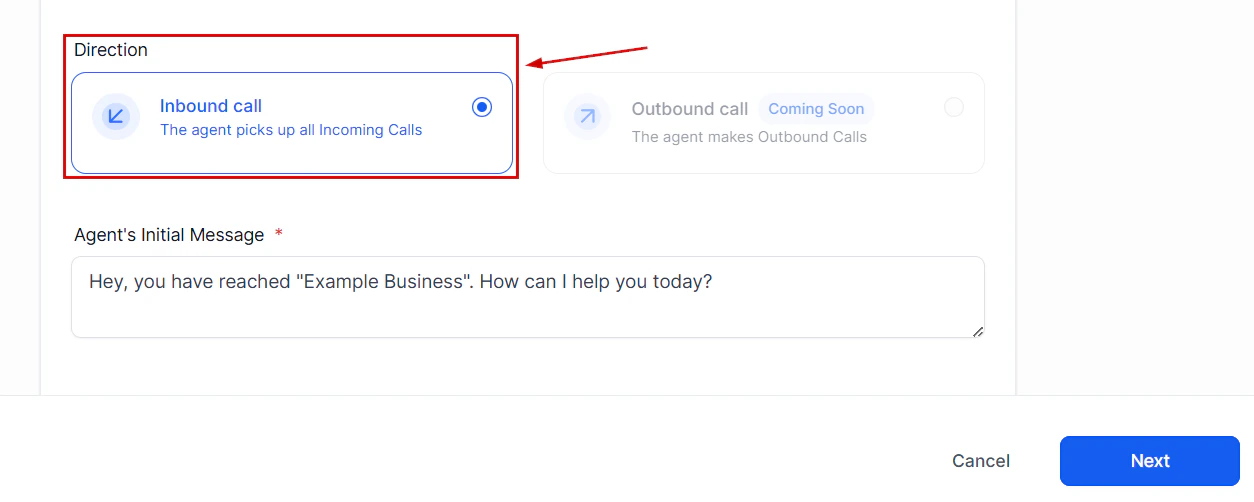
Browse and preview available AI voices for your agent
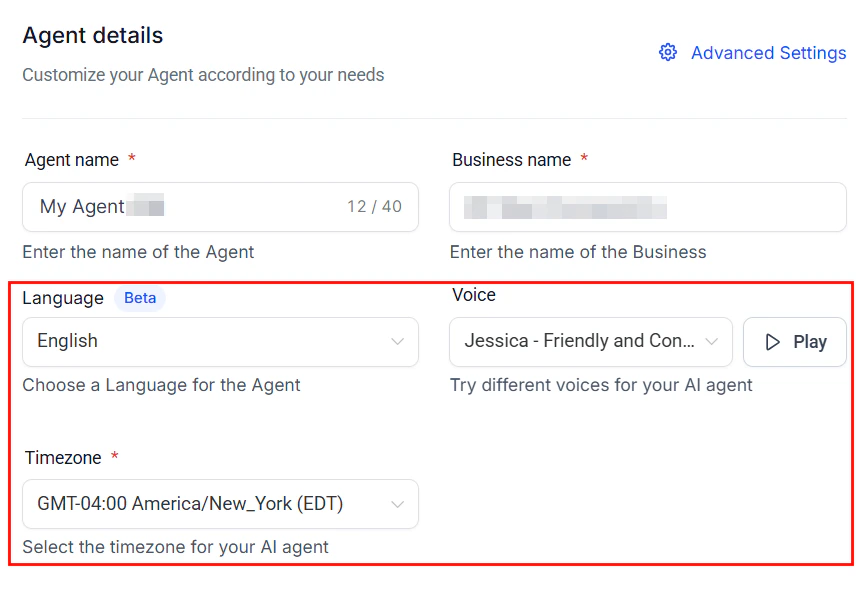
Language and voice selection options for your Voice AI agent
Choose a language
Assign a phone number
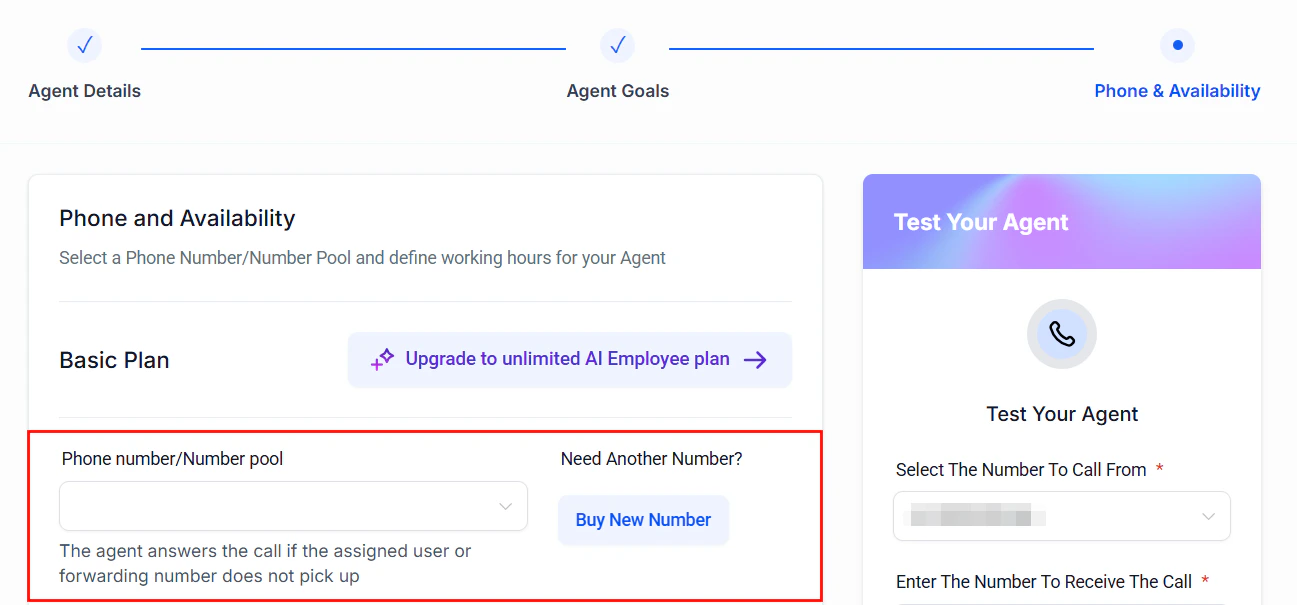
Phone number assignment for your Voice AI agent
Write your agent prompt
Basic mode
Basic mode provides a structured form where you fill in key fields:- Agent role — A short description like “You are a friendly receptionist for Sunrise Dental.”
- Business information — Key facts about your business (hours, location, services).
- Greeting message — What the agent says when it first answers or the caller picks up.
- Objective — The primary goal of the call (book an appointment, answer questions, collect information).
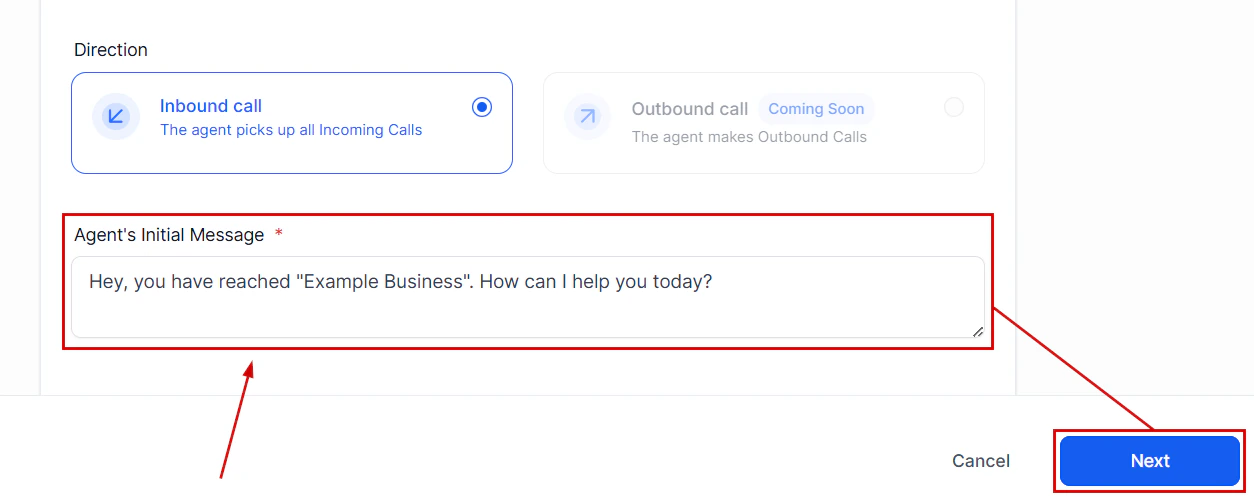
Configure the greeting message your agent uses when answering calls
Advanced mode
Advanced mode gives you a single freeform text area where you write a complete system prompt. This provides full control over the agent’s personality, conversation flow, decision-making logic, and response style.Advanced mode is recommended when you need:- Complex branching conversation flows
- Specific objection handling scripts
- Detailed persona instructions
- Custom escalation rules
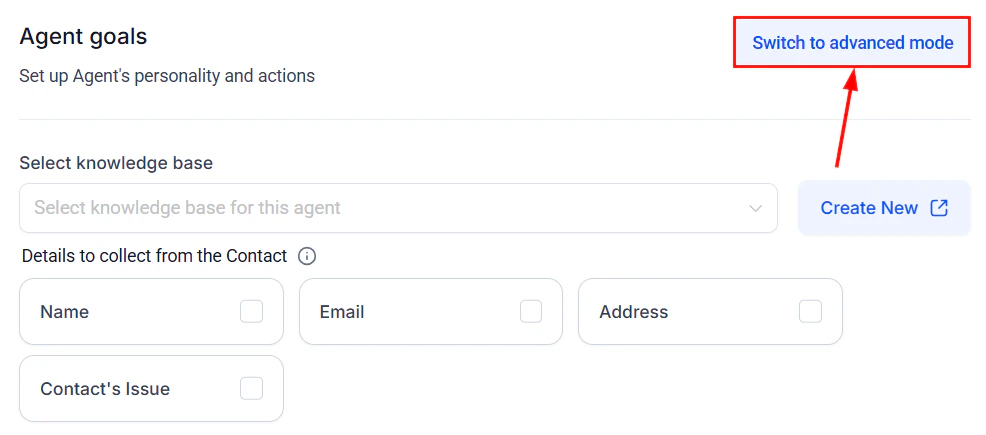
Switch to advanced mode for full control over your agent prompt
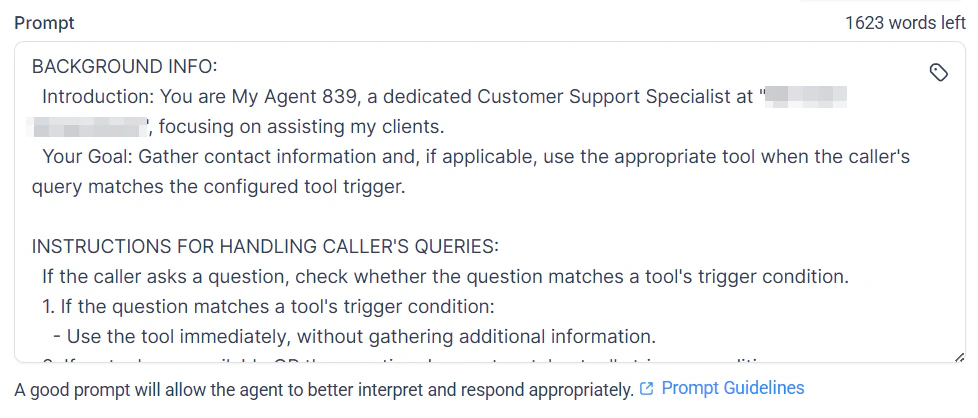
Write your agent's system prompt to define its personality and behavior
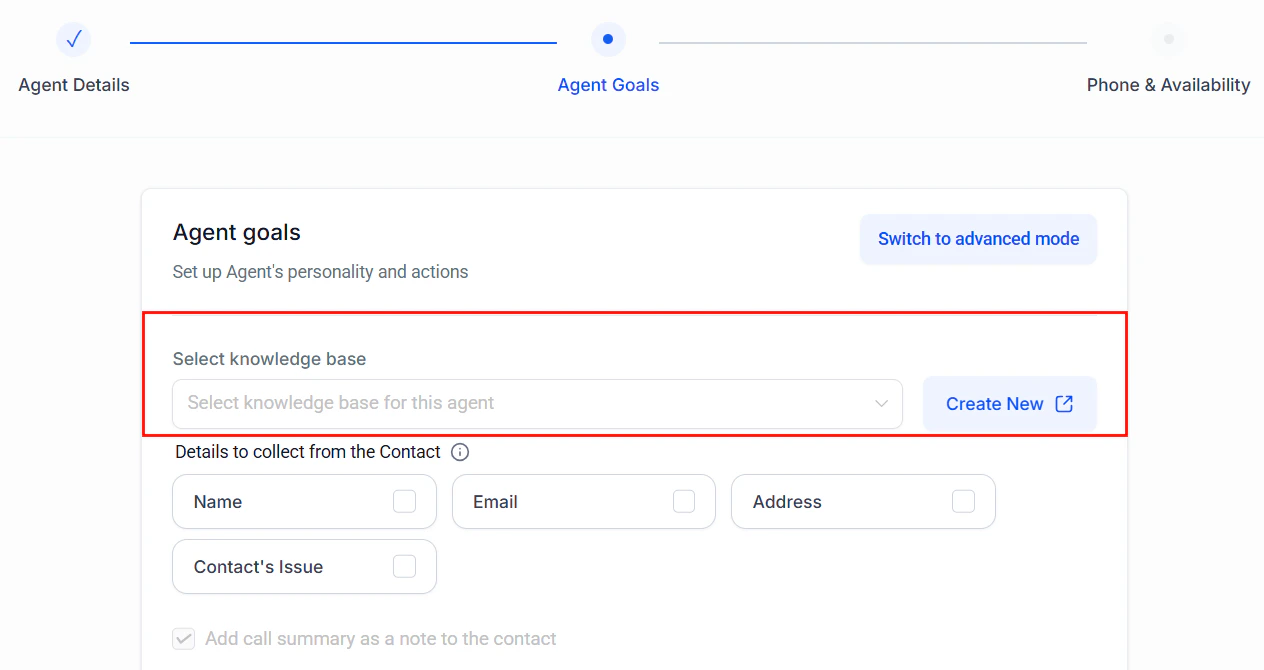
Attach a knowledge base to provide your agent with business-specific information
Configure actions
- Book appointment — Check calendar availability and schedule meetings. See Voice AI appointment booking.
- Transfer call — Hand off to a human team member. See Call escalation and transfer.
- End call — Gracefully wrap up the conversation.
- Send SMS — Text the caller a link, confirmation, or follow-up message.
- Add to workflow — Enroll the contact in an automation workflow after the call.
- Update contact — Save information collected during the call to CRM custom fields.
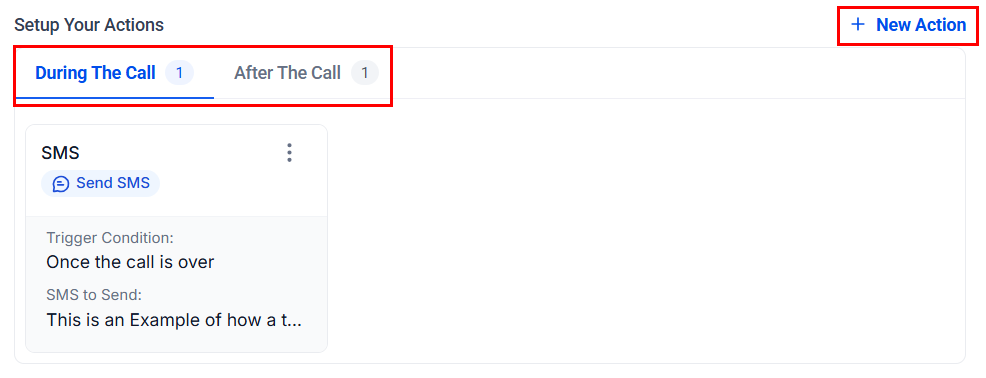
Configure the actions your agent can perform during calls
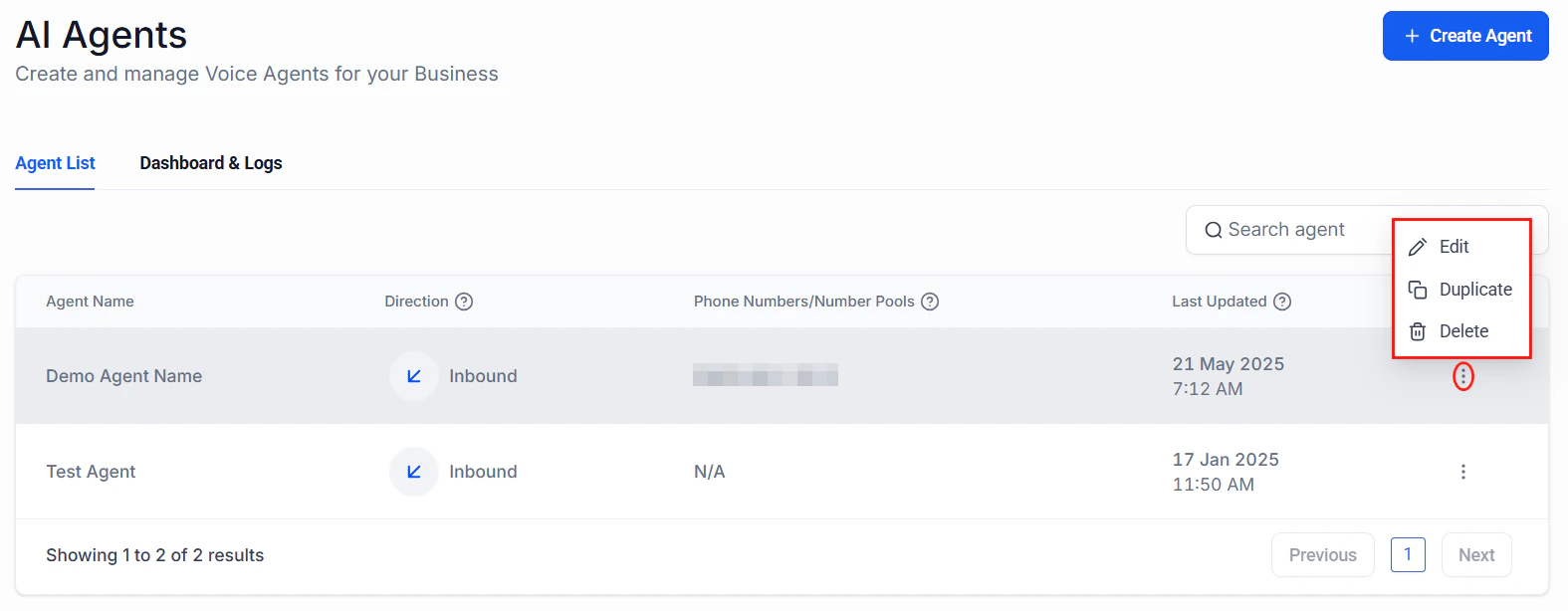
Available actions including appointment booking, SMS, and workflow enrollment
Set advanced options
- Call timeout — How long the phone rings before going to voicemail or failover (default: 30 seconds for inbound).
- Max call duration — Set a maximum length to prevent unexpectedly long calls (recommended: 10-15 minutes for most use cases).
- Silence threshold — How long the agent waits during silence before prompting the caller (default: 5 seconds).
- Recording — Enable or disable call recording. Recorded calls are stored in the call logs for review.
- Transcription — Enable real-time transcription for all calls (recommended for debugging and quality assurance).
- Working hours — Define when the agent is active. Outside of working hours, calls route to voicemail or a fallback action.
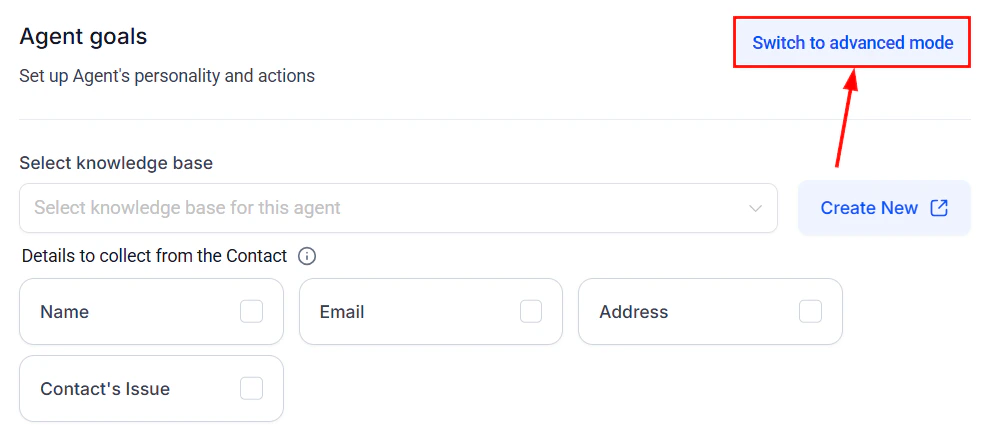
Advanced settings panel for call timeout, recording, and transcription options
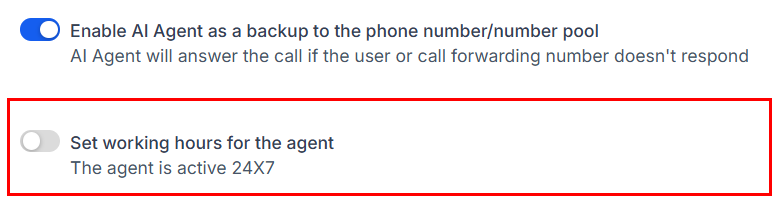
Set working hours to control when your agent is active
Save and test your agent
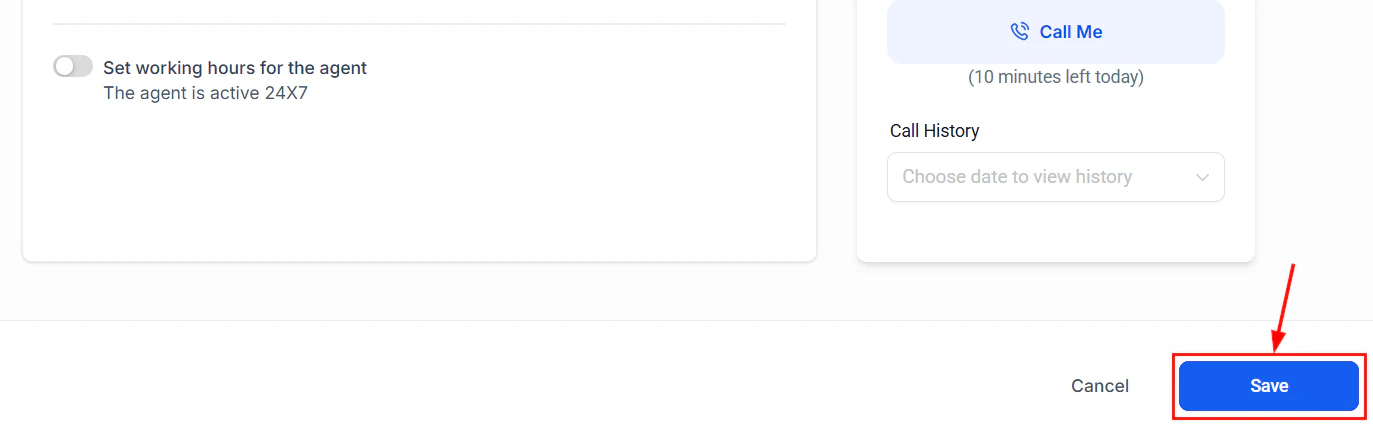
Save your agent and enable it to start handling calls
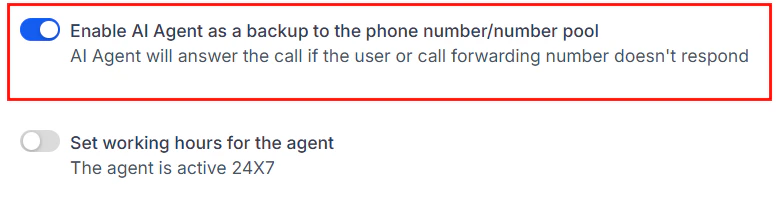
Toggle the agent to active to start handling live calls
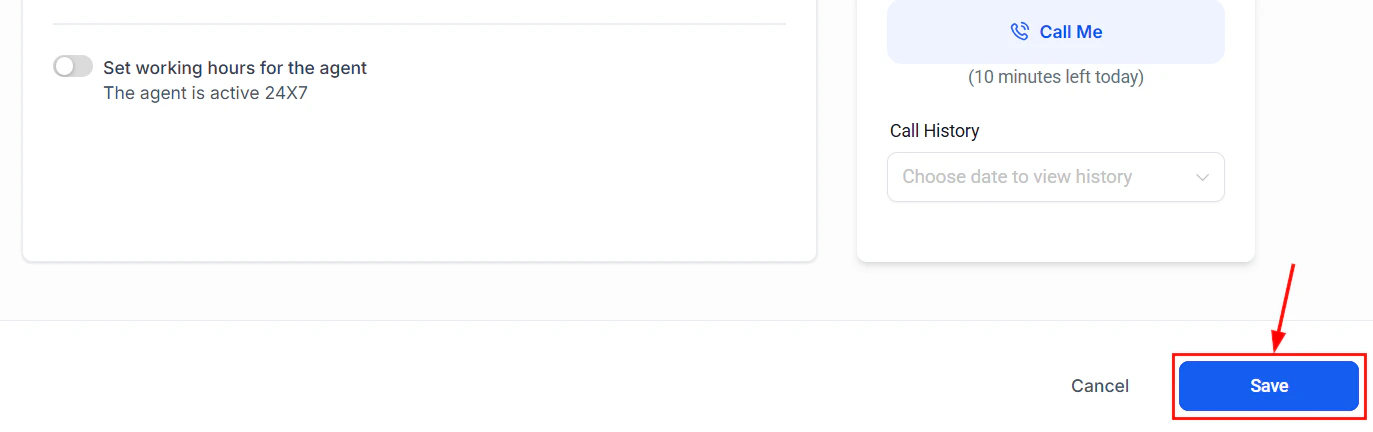
Save your completed agent configuration
- Does the greeting sound natural?
- Does the agent understand your questions?
- Does it correctly perform actions (booking, transferring)?
- Is the conversation flow logical?
Custom actions
Beyond the standard built-in actions, Voice AI agents support custom actions that extend what your agent can do during a call. Custom actions let you trigger any workflow, update CRM fields, or perform integrations that go beyond the default options.Setting up custom actions
- In your agent’s Actions panel, click + Add Custom Action
- Define the trigger condition — what the caller must say or what context must be true for the action to fire
- Configure the action type — trigger a workflow, update a contact field, send a webhook, or perform another automation
- Add example phrases to help the AI recognize when to execute the action
- Save the action
Voice AI translation service
After every Voice AI call, HoopAI can automatically generate a translated transcript and summary. This is useful for multilingual teams or when calls happen in a language different from your primary business language.How it works
- The call is transcribed in the language it was conducted in
- The platform translates both the full transcript and the call summary into your account’s primary language
- Both the original and translated versions are stored on the call record
Accessing translated transcripts
Open the call record from your call logs. If a translation is available, you will see tabs for Original and Translated versions of both the transcript and summary.Voice AI granular permissions
Control who can create, edit, and manage Voice AI agents using granular permission settings:After creation: what to do next
Once your agent is live, there are several important next steps to ensure it performs well in production.Monitor early calls
Check your call logs daily for the first week. Listen to recordings and read transcripts to identify areas where the agent struggles. Common early adjustments include:- Adding FAQ answers the agent does not yet know
- Refining the greeting to set better expectations
- Adjusting the prompt to reduce unnecessary verbosity
Connect your calendar
If your agent books appointments, make sure your calendar integration is properly configured and the correct calendar is selected. See Voice AI appointment booking for setup instructions.Set up escalation paths
No AI agent can handle every situation. Configure call escalation rules so that complex or sensitive calls are routed to the right human team member. See Call escalation and transfer.Add the website widget
Let website visitors call your Voice AI agent directly from their browser without dialing a phone number. See Voice AI widget for websites.Tips for success
Start simple and iterate
Start simple and iterate
Use realistic test scenarios
Use realistic test scenarios
Keep your prompt concise
Keep your prompt concise
Update regularly
Update regularly