

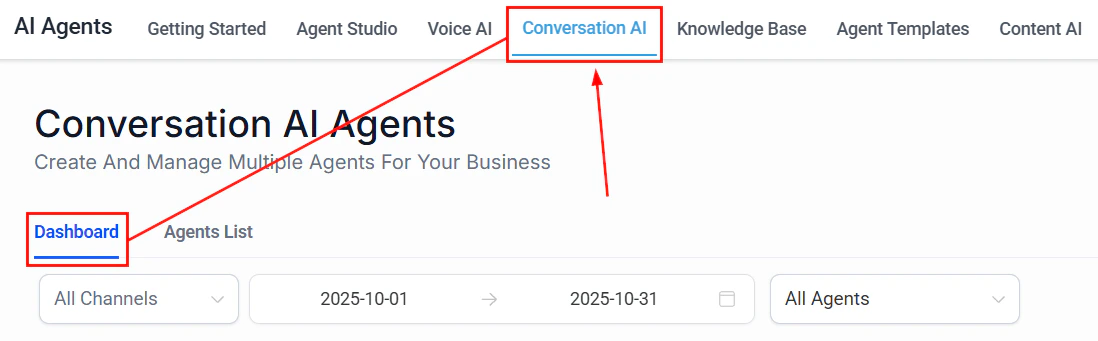
The Conversation AI dashboard showing what metrics to monitor for AI performance
What AI can do well
- Answer common customer questions using your knowledge base
- Qualify leads based on conversation data
- Book appointments by checking calendar availability
- Route conversations to the right team member
- Generate content drafts for emails, social posts, and web pages
- Handle high volumes of simultaneous conversations
What AI cannot do
- Make complex judgment calls that require human empathy or nuanced understanding
- Guarantee 100% accuracy in every response
- Access real-time external data beyond what is in your knowledge base and system prompt
- Handle sensitive situations (legal advice, medical diagnoses, crisis intervention) without human oversight
- Learn from individual conversations automatically (training requires manual updates)
When to involve humans
Configure your AI agents to escalate to a human team member when:- The customer explicitly asks to speak with a person
- The conversation involves a complaint or sensitive issue
- The AI is not confident in its response
- A transaction or decision requires human authorization
- The topic is outside the agent configured scope
Transparency guidelines
- Always disclose to customers that they are interacting with an AI
- Set realistic expectations about what the AI can help with
- Provide an easy path to reach a human when needed
- Be honest about AI-generated content (do not present it as human-written)
Next steps
Guardrails
Set behavioral boundaries for your AI
AI safety overview
Our principles for responsible AI